


iFi xCAN vs xDSD Review: Which Portable Bluetooth DAC/Amp Is Better?
At the risk of seeming like an overzealous fan of iFi, I’ve got yet another product review. What can I say? They make fairly priced gear, and they’re always eager to send new toys for review. In any case, I’ve been both intrigued and puzzled by these two little units for the past couple of months, which is partly why I haven’t posted much content recently.
The units I’m talking about are the iFi xDSD ($399) and iFi xCAN ($299), two portable Bluetooth DAC/amp devices that approach the same problem from slightly different directions. Both let you enjoy music from your phone without relying entirely on your phone’s built-in audio hardware, but their differences become important once you look beyond the Bluetooth connection.
If you’re wondering why these devices need Bluetooth in the first place, rest assured that I had the same question. Unlike the Chord Poly, the iFi xDSD and xCAN are not all-in-one streaming devices. Instead, they connect to your source over Bluetooth. You can also use a wired connection where supported, plug in your headphones, and get on with listening.
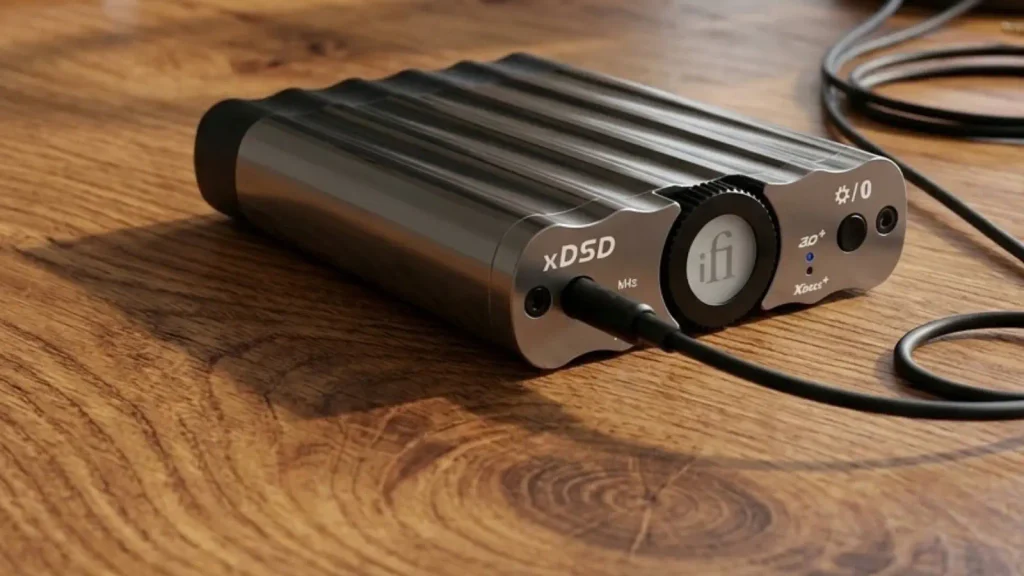
After my initial confusion about how these units worked, the iFi team patiently explained their purpose. I was then left wondering why the company needed two devices that appeared to do almost exactly the same thing. Both support Bluetooth, both can function as DACs and headphone amplifiers, and both have similar front panels with a headphone output, 3D+ and xBASS buttons, and that funky multicolored volume control.
The answer is that the xDSD and xCAN are designed for slightly different priorities.
iFi xDSD vs xCAN: What’s the Difference?
The iFi xDSD is primarily a DAC with headphone amplification, while the xCAN puts amplification first. That distinction makes more sense once you look at their connections and intended uses.

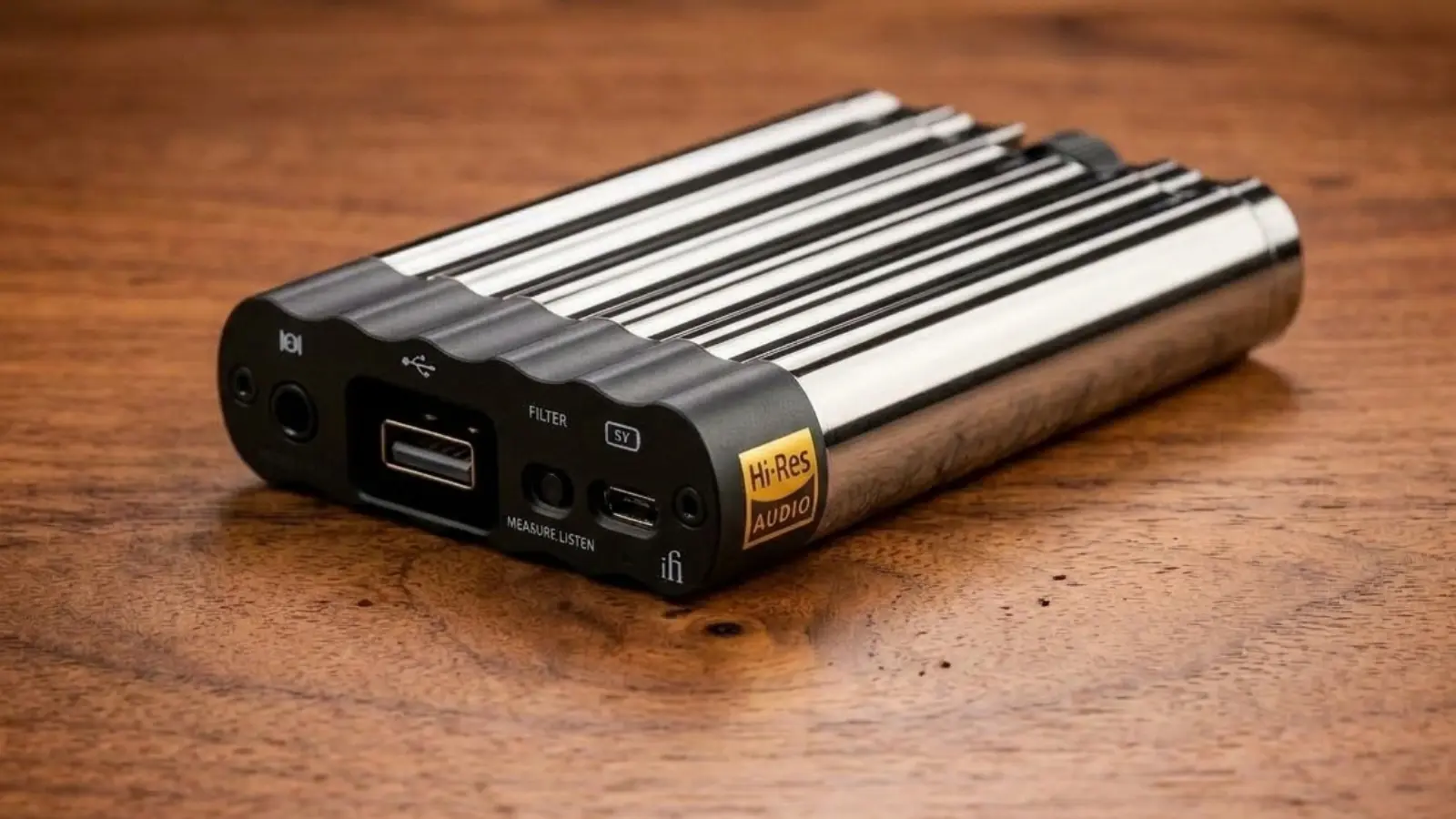
The xDSD can connect over USB and function like a conventional external USB DAC. It also includes a S/PDIF input combining 3.5mm coaxial and optical Toslink connections, which is useful if you want to connect a CD player or an older digital audio player. Its filter switch offers Listen and Measure settings, which provide different digital filtering options.
The xCAN takes a different approach. It offers a 3.5mm single-ended headphone output alongside a 2.5mm balanced output. On the input side, it has 3.5mm and 2.5mm balanced connections, plus USB-C for charging. Its adjustable xBASS feature offers three levels of bass and presence-region enhancement.
The xCAN’s ESS Sabre DAC is used for converting its Bluetooth audio signal. With an analog input, it operates as an analog amplifier rather than passing the signal through its digital conversion stage. Bluetooth playback is limited by the supported Bluetooth audio formats, while the xDSD offers broader wired digital audio support, including high-resolution PCM and DSD.
Think of these two products as twins separated at birth. One took the digital road, while the other followed the analog path.
If you have demanding headphones and want a portable amplifier, the xCAN is the more obvious choice. If you need additional digital inputs for a computer, CD player, or other source, the xDSD makes more sense.
Sound Quality: How Do the iFi xDSD and xCAN Compare?
The sound of these two devices is more similar than different, and the choice between them ultimately comes down to features and intended use. Yes, the xDSD has more extensive digital conversion capabilities, and there are differences in their amplification specifications. However, these differences were subtle enough that I mainly noticed them because I had both units available for an extended comparison.
On a casual first listen, the gap between them was smaller than I had anticipated.
If you’re familiar with iFi’s Black Label and iDSD products, forget what you think you know about their sound. These two units share only a passing resemblance to those earlier designs. I’ve generally enjoyed iFi’s sound, which I’ve often found tastefully tuned, although sometimes a little laid-back and soft in the treble. The presentation could be punchy, but it wasn’t always my first choice for more refined acoustic music or classical recordings.
The x-series has a smooth, midrange-focused presentation that listeners familiar with Burr-Brown-based converters may recognize.
Writing
I’ve also spent time exploring iFi’s sound through its home audio products. In my review of the iFi NEO Stream’s sound signature for Ampreviews, I looked at how the company’s approach to digital audio translates to a dedicated network streamer. That experience provides another point of reference for understanding iFi’s sound, although the NEO Stream and the xDSD and xCAN serve very different purposes. The similarities are worth exploring, but these portable devices have a character of their own.
However, the analog presentation is more forward and sharper than I remember from the Black Label units. Transients snap rather than simply punch, and the overall sound comes across as tighter and more refined.
With neutral headphones, this wasn’t a problem. I would be more cautious about pairing these units with the Sennheiser HD800 or older Beyerdynamic headphones, as my experiments with those combinations were less enjoyable than my results with the MrSpeakers Aeon Flow Closed and some ZMF headphones. The combinations weren’t unlistenable, but I preferred the results with headphones that were warm to neutral rather than particularly bright.
Beyond the increased clarity and transient definition in the presence and treble regions, I felt the lower mids and midbass had been cleaned up. That helped lift the perceived refinement and definition several notches above what I was accustomed to hearing from the iDSD series.
Pop and rock benefited from the additional clarity, but well-recorded classical and acoustic music impressed me most.
Listening to Music With the iFi xCAN and xDSD
Listening to the Cat Empire’s Brighter Than Gold and Jean Rohe’s End of the World Show was an absolute pleasure. These are two of my reference recordings for transient clarity and definition, and both devices handled them particularly well.
Despite the more forward tonal balance, I never felt the presentation became harsh when I used headphones that weren’t overly bright. That balance is important because the headphones you choose will have a significant influence on the final result.
For anyone wanting more bass, the xBASS feature is worth exploring. I particularly appreciated it with the Aeon headphones. It adds a modest presence boost alongside the bass enhancement, with the lower settings providing a tasteful lift in the low midbass and sub-bass.
The highest setting was less convincing to my ears. It introduced a slightly processed quality and pushed the presence region too far forward for my tastes, although some listeners may enjoy the extra energy.
What About iFi’s 3D+ Sound Enhancement?
The 3D+ feature will be familiar to anyone who has used other iFi products. I don’t believe its implementation has changed dramatically here, and my feelings about it remain lukewarm.
I found it more agreeable than I remember from some older iFi devices, but I could still hear a peculiar phase-like quality that I couldn’t quite identify. At times, it sounded as though certain frequency bands were experiencing a mild polarity inversion.
I’ve been working on a survey of head tracking, crossfeed, and spatialization implementations, so I may be particularly sensitive to these effects. My advice is simple: try 3D+ with your own headphones and recordings. If you enjoy what it does, use it. If not, leave it switched off.
Design, Controls, and Everyday Usability
I’ve covered sound quality first because that’s what most of us are interested in. I don’t usually spend much time criticizing ergonomics unless something is particularly good or particularly frustrating. In this case, the controls gave me a bit of a headache.
This may be personal bias. I’m accustomed to audio engineering equipment with large knobs that do obvious things, sometimes accompanied by neon lights and arrows to make everything idiot-proof. The iFi xDSD and xCAN are considerably less straightforward.
The manual is practically essential reading. Clicking the front volume control changes its color, while pressing and holding it or cycling through its functions reveals different operating modes. These include pairing, volume control, USB input, and standby.
To say I found the controls confusing at first would be an understatement.
Thankfully, the manual is clearly written, and I eventually worked everything out without too much trouble. I’ll chalk some of that up to my being a luddite, but seriously, download the PDF manual from iFi’s website before you start using either device.
Another minor complaint concerns the finish. Although there’s a grippy rubber section on the front, the rest of the unit is rather slippery and prone to fingerprints. This wasn’t a major problem on my desktop, but anyone who regularly carries equipment in a nylon jacket pocket should be aware that it may shift around.
Wired USB vs Bluetooth: Which Sounds Better?
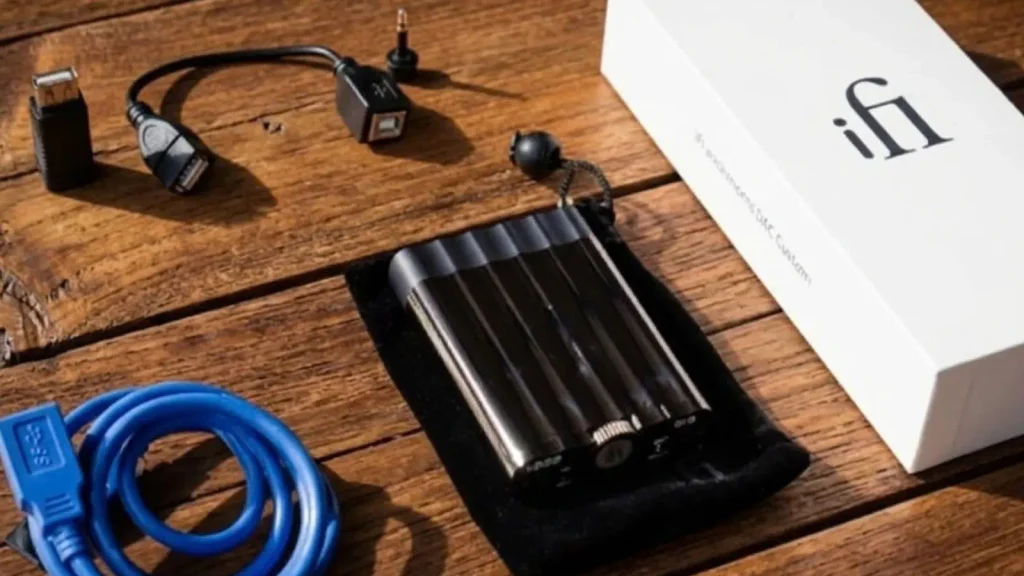
iFi also sent one of its OTG cables, designed to make connecting the devices to an Android phone easier. I found it genuinely useful and didn’t encounter the finicky port-management issues I’ve experienced with some other solutions.
I didn’t have alternative cables available for a proper comparison, but I preferred the sound when the devices were connected by wire rather than Bluetooth. Imaging seemed tighter, and the overall presentation sounded cleaner and more lively.
That doesn’t mean Bluetooth was disappointing. Quite the opposite. Both devices delivered very enjoyable sound over Bluetooth, and the convenience was a big part of their appeal.
The wired connection simply gave me another reason to appreciate the flexibility of these units. You can use them wirelessly when convenience matters and switch to a wired connection when you want to explore what your source and headphones can deliver.
Are the iFi xDSD and xCAN Good for Portable Listening?
I was initially skeptical about carrying separate portable audio devices. These days, I mostly use Audeze Mobius headphones wirelessly when travelling, and I’ve grown accustomed to the convenience of a high-quality Bluetooth headphone.
Going back to separate devices and cables wasn’t something I was particularly excited about.
I’m happy to report that the experience was much better than expected. From a cable-management perspective, the connection was no more annoying than the headphone cable itself. I was also pleasantly surprised by the sound quality, battery life, and ease of use of both units.
The biggest adjustment was learning to switch between my phone for music selection and the iFi unit for volume and sound-processing controls. Part of that is simply habit. I’ve become accustomed to using my phone as an all-in-one control centre, particularly when travelling.
Keeping track of a multifunction button on one device and a touchscreen on another wasn’t unworkable, but it was more cumbersome than my usual wireless setup. Anyone who regularly travels with portable audiophile equipment will probably adapt more easily.
Still, the experience demonstrated that a separate Bluetooth DAC and headphone amplifier can offer a worthwhile alternative to relying entirely on wireless headphones.
Verdict: Should You Buy the iFi xDSD or xCAN?
Both the iFi xDSD and xCAN are capable portable audio devices. Despite my reservations about their controls and the 3D+ feature, I enjoyed their sound quality, particularly when paired with the right headphones. They also make it easier to move between wired and Bluetooth listening without giving up the benefits of a dedicated DAC or headphone amplifier.
I do wonder whether the logical conclusion of the Bluetooth debate is simply better Bluetooth headphones. I have to admit that I obtained better sound quality from a good pair of closed-back headphones paired with one of these units than I did from my Audeze Mobius alone.
Even so, I can’t ignore the convenience of true wireless listening. It’s probably what I’ll continue using when travelling.
Between these two iFi devices, however, I’d choose the xCAN for portable Bluetooth listening. At its original $299 price, it costs $100 less than the xDSD and offers the stronger value proposition for someone who primarily wants Bluetooth playback and headphone amplification.
Unless you specifically need the xDSD’s USB DAC functionality, additional digital inputs, and high-resolution wired playback, I don’t think the extra $100 is justified for my intended use. If I wanted a compact DAC primarily for a computer or CD player, I’d also consider other iFi models with a feature set better suited to that purpose.
For portable Bluetooth use, the xCAN is the one I’d buy. The xDSD remains the more versatile choice for listeners who need its additional digital connectivity, but the less expensive xCAN makes more sense for my priorities.