
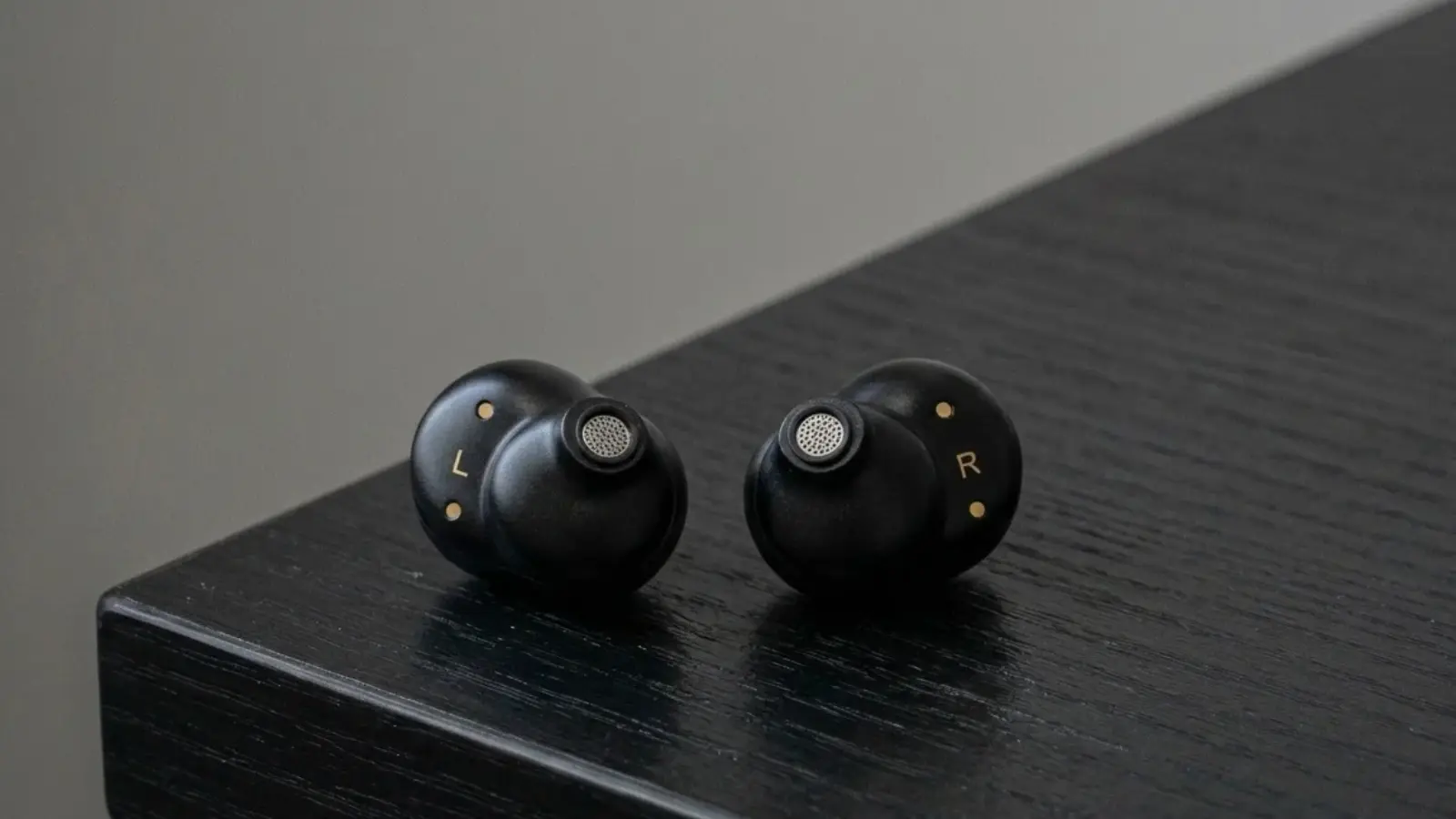
HiFiMAN TWS600 Review: Detailed Sound, Featherweight Design and Frustrating Controls
True wireless headphones have become increasingly popular, but the HiFiMAN TWS600 is an unusual addition to the market. Known for its audiophile headphones and planar magnetic technology, HiFiMAN has taken a different approach with its first true wireless earbuds.
The TWS600 combines an exceptionally lightweight design, a surprisingly large battery capacity and the company’s proprietary Topology diaphragm drivers. Its sound also takes an unconventional approach, favouring vocals and midrange detail over the bass-heavy presentation commonly associated with wireless earbuds.
But there are compromises. Physical buttons make everyday operation awkward, Bluetooth codec support is limited to SBC and AAC, and the unusual sound signature won’t suit every listener.
We spent time listening to the HiFiMAN TWS600 to find out where these wireless earbuds excel and where they fall short.
An Alien-Inspired Design That Barely Weighs Anything
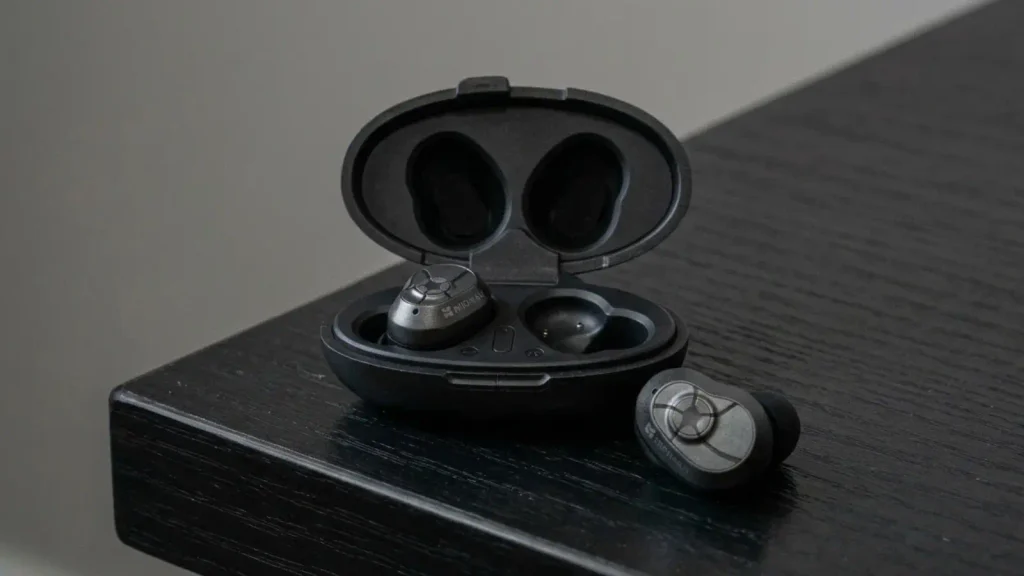
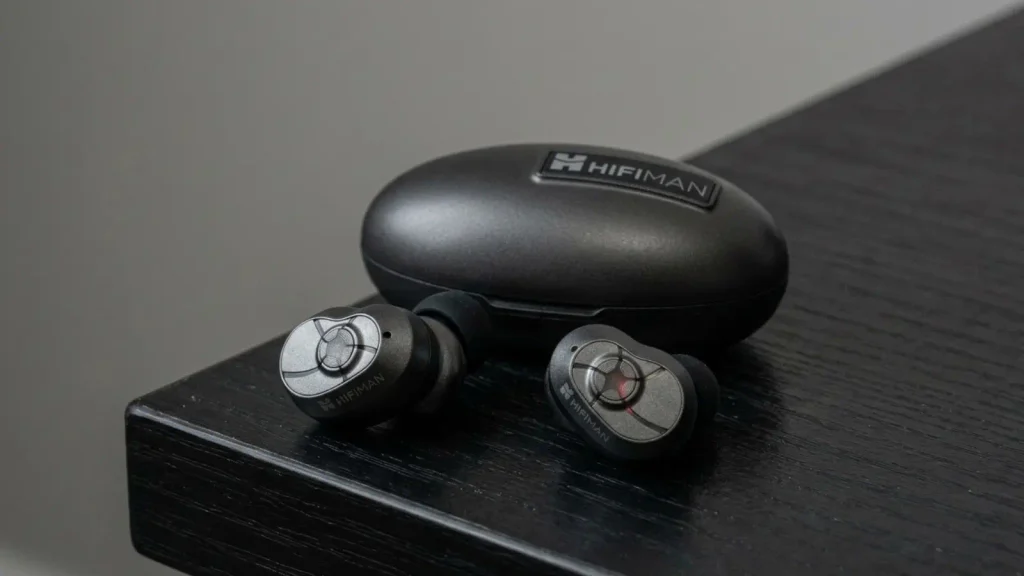
The first thing that stands out about the HiFiMAN TWS600 is its charging case. It’s remarkably small, with an unusual shape that resembles an alien egg. The earbuds continue the same futuristic design language, featuring dark grey plastic with transparent accents through which the status LEDs shine.
The result is a distinctive cyberpunk-inspired appearance that certainly doesn’t look like most conventional wireless earbuds.
Despite the plastic construction, the case feels reasonably well assembled. It doesn’t creak or feel unstable, and both the case and earbuds are surprisingly lightweight.
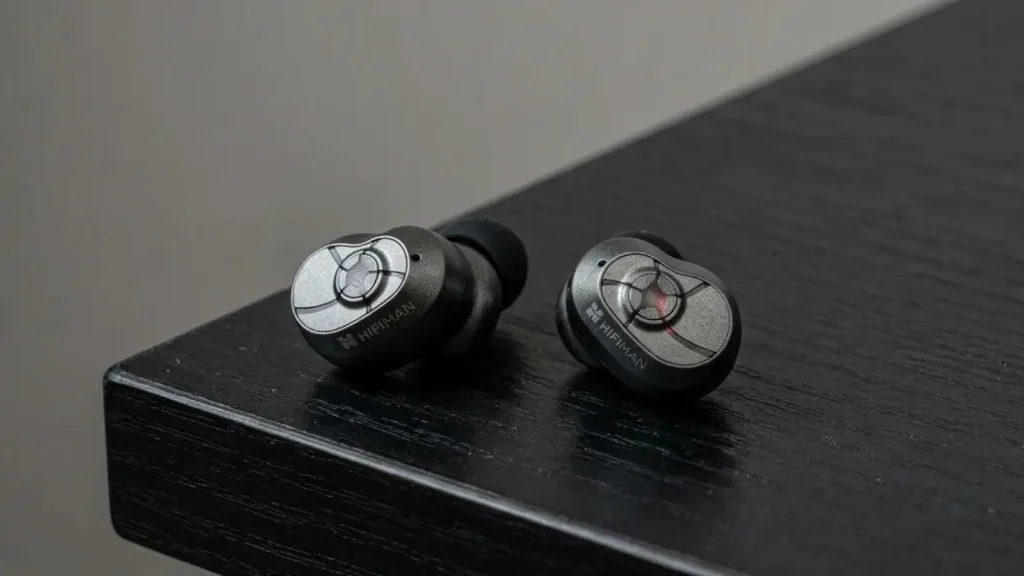
Comfort is one of the TWS600’s strongest qualities. With the right ear tips, the earbuds almost disappear in your ears, making them comfortable for extended listening sessions.
Battery Life, Comfort and Ear Tips
HiFiMAN rates the TWS600 for up to 5.5 hours of playback on a single charge. During testing, the earbuds lasted almost five hours.
The charging case provides approximately six additional charges, adding up to a claimed 33 hours of extra playback.
Considering how lightweight the entire package feels, the battery capacity is particularly impressive.
Getting the right fit, however, is important. Like most in-ear headphones, the TWS600’s sound depends heavily on how well the ear tips seal your ear canal. A secure fit is also essential to prevent the earbuds from falling out during movement.
The package includes eight pairs of ear tips, including unusual triple-flange designs. There should be enough options to find a suitable fit, and the standard nozzle diameter also means compatible aftermarket tips can be used.
The earbuds carry an IPX4 rating, providing protection against splashes and sweat.
One small inconvenience is that longer triple-flange ear tips can prevent the charging case from closing properly.
Physical Buttons Are the Biggest Ergonomic Problem
Not everything about the TWS600’s design works as well as its lightweight construction.
HiFiMAN has opted for physical buttons rather than touch controls. They require a noticeable amount of pressure, which becomes uncomfortable because the earbuds sit relatively deep in the ear canal.
Pressing a button can feel as though you’re pushing the earbud too far into your ear.
The solution is to hold the earbud in place with one finger while pressing the button with your thumb. Unfortunately, this can disturb its position and sometimes requires readjusting or reinserting it.
The controls work as follows:
- Single press on either earbud: Play or pause.
- Double press on the left earbud: Decrease volume.
- Double press on the right earbud: Increase volume.
- Triple press on the left earbud: Next track.
- Triple press on the right earbud: Previous track.
- Long press: Activate the voice assistant.
In practice, adjusting the volume and changing tracks directly from your smartphone is often more convenient.
The earbuds also support phone calls. HiFiMAN recommends removing one earbud and holding it closer to your mouth so its microphone can capture your voice more clearly. Following this recommendation, microphone performance is satisfactory.
HiFiMAN’s Topology Diaphragm Takes Centre Stage
HiFiMAN built its reputation around sound quality rather than elaborate product design, and the TWS600 follows that philosophy.
Inside, the earbuds use the company’s proprietary Topology diaphragm driver. Its special nanoparticle coating is designed to produce a more natural and detailed sound, according to HiFiMAN.
The manufacturer also recommends allowing the drivers to run in for approximately 10–20 hours. This recommendation appears on the company’s website and in the documentation supplied with the headphones.
The wireless connection uses Bluetooth 5.0, with HiFiMAN advertising a range of up to 150 metres. In practical use, the range was closer to 50 metres in open space. Indoors, the signal struggled to pass through three walls.
Another useful feature is independent earbud operation. Either the left or right earbud can be used individually, with both audio channels combined into mono.
There is, however, a significant limitation for audio enthusiasts: the TWS600 supports only SBC and AAC codecs. More advanced options such as aptX and LDAC are absent.
Sound Quality: Detailed Vocals and an Unusual Frequency Balance
The most interesting aspect of the HiFiMAN TWS600 is its sound signature.
During the initial listening sessions, the presentation seemed somewhat thin. After approximately a week of intermittent use, the sound became more balanced, although the emphasis on the midrange and upper frequencies remained noticeable.
The TWS600 doesn’t follow the familiar V-shaped tuning commonly found in lifestyle-oriented wireless earbuds. Instead, its presentation is closer to a Λ-shaped frequency response, with a pronounced midrange and less perceived emphasis on the bass.
This makes vocals particularly prominent.
On some recordings, the effect is impressive. Agnes Obel’s music benefits from the additional vocal presence, creating an engaging and intimate presentation.
However, the same emphasis can become excessive with certain tracks.
Fatboy Slim’s “Right Here, Right Now” sounded noticeably bright, particularly around the vocals and string samples. In “Heavyweight” by Infected Mushroom, the thick guitar textures and weight of the final notes were partially overshadowed by the brighter solo elements.
The TWS600 can therefore make some recordings sound more engaging while making others less natural.
Bass Performance: Fast and Controlled, but Sometimes Overlooked
The midrange emphasis has an obvious consequence: bass can sometimes feel less prominent than it should.
On recordings featuring cello and lower-register piano, the instruments lose some of their weight. The overall balance can suffer when the midrange becomes too dominant.
However, that doesn’t mean the TWS600 lacks bass.
On Agnes Obel’s “The Curse”, the strings sound full, dense and expressive when the vocals aren’t taking centre stage.
The Hollow Knight soundtrack provides another interesting example. Without prominent vocals, the bass line sounds confident and retains its presence among the other instruments.
Bass speed is another positive characteristic. Listening to The Prodigy, the drivers keep pace with the energetic arrangements and rapid changes.
Occasionally, however, the bass becomes overshadowed by midrange effects, which can become somewhat piercing.
Overall, the bass is fast, tight and lively, but listeners looking for a powerful, dominant low end may find the presentation restrained.
Detail Retrieval and Soundstage
Detail retrieval is one of the TWS600’s strongest qualities.
Small musical elements are reproduced clearly, with individual details retaining their timing and relative position in the recording.
The soundstage is relatively intimate rather than expansive. Instruments occupy a compact space, and their boundaries aren’t always sharply defined.
This creates a close, personal listening experience, although the prominent midrange prevents the presentation from feeling particularly spacious.
The upper frequencies are more impressive. There is plenty of air, allowing subtle overtones and high-frequency details to remain audible.
For completely wireless earbuds, this level of high-frequency openness is unusual and contributes to the TWS600’s distinctive character.
Can Equalisation Improve the HiFiMAN TWS600?
Fortunately, the TWS600 responds well to equalisation.
Reducing the region around 2 kHz helps control the prominent midrange and makes the overall presentation more balanced.
This is particularly useful for recordings where vocals or string instruments become too forward.
The headphones retain their detail and responsiveness after EQ adjustments, allowing listeners to tailor the sound to their preferences.
Considering the limited Bluetooth codec support, the level of detail is impressive. It also leaves the impression that the underlying drivers could offer even more with a more capable wireless implementation.
Verdict: An Interesting First Attempt at True Wireless Audio
The HiFiMAN TWS600 is an unusual pair of wireless earbuds. Rather than following the bass-heavy sound signature of many lifestyle models, it prioritises vocal presence, midrange detail and an airy high-frequency presentation.
Its lightweight construction, comfortable fit, impressive battery capacity and detailed sound are genuine strengths.
However, the physical buttons are frustrating, the sound signature can become overly bright, and the lack of aptX or LDAC limits its wireless codec options.
The TWS600 is best suited to listeners who enjoy vocal-focused music, appreciate detailed reproduction and don’t mind experimenting with equalisation.
It is less convincing for those who prefer powerful bass, a more neutral tonal balance or effortless everyday controls.
For HiFiMAN’s first fully wireless earbuds, the TWS600 is a promising effort. It has a distinctive sonic identity and plenty of potential, but its ergonomic compromises leave room for improvement.
The most interesting part is that the company has already demonstrated what it can achieve with its wireless drivers. A future generation with improved controls and broader codec support could be considerably more compelling.